Quantum Information in Many-Body Systems
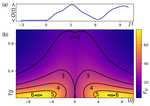
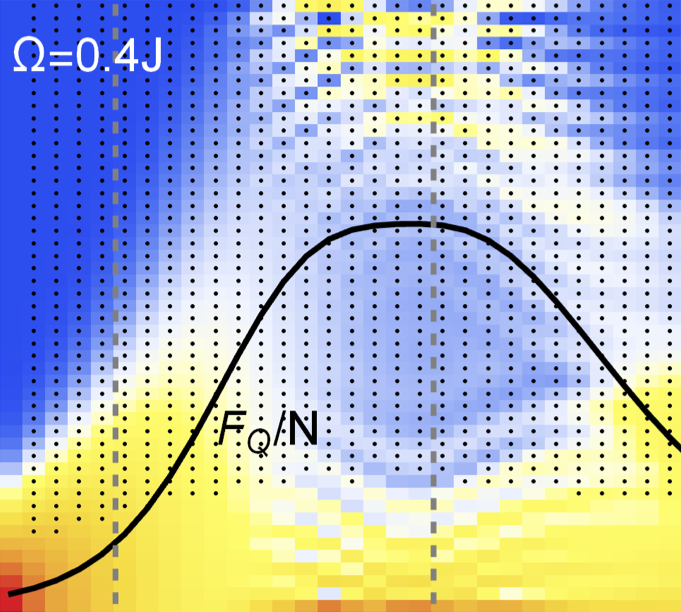 Multiple-quantum coherence spectrum as an entanglement wittness;
Phys. Rev. Lett. 120, 040402 (2018)
Multiple-quantum coherence spectrum as an entanglement wittness;
Phys. Rev. Lett. 120, 040402 (2018)
Understanding the fundamental laws that govern complex quantum systems is one of the central challenges of modern physics, with far-reaching implications for both our picture of nature and the development of quantum technologies. At the intersection of quantum many-body physics and quantum information theory, a set of deep and interrelated questions has emerged: How does chaos arise in quantum systems? What characterizes holographic phases that admit a gravitational description? How do dissipation and measurement reshape thermalization and quantum phases? And what is the true cost of quantum computation beyond entanglement?
Our group addresses these questions through a combination of analytical and numerical approaches at the interface of many-body theory, quantum information and computing, and high-energy physics. We investigate quantum chaos and holographic quantum matter, using the paradigmatic Sachdev–Ye–Kitaev model, and its extensions, to bridge between many-body dynamics and gravity. We study non-Hermitian and open quantum systems to understand how dissipation and measurement modify thermalization, chaos, and phase structure. In parallel, we explore quantum complexity, such as non-stabilizerness, as both a diagnostic of chaotic dynamics and a resource governing computational power across many-body regimes.
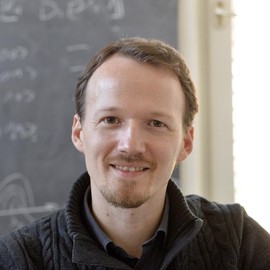
Philipp Hauke
Professor
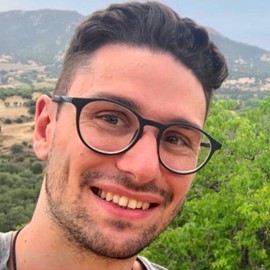
Andrea Legramandi
Postdoc

Ganesh Hanchanahal
PhD Student
David Pascual Solis
PhD Student
Naga Dileep Varikuti
Postdoc
Publications
Deep Thermalization and Measurements of Quantum Resources
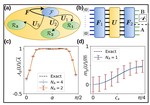
From single-particle to many-body chaos in Yukawa--SYK: theory and a cavity-QED proposal
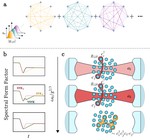
Quantum Resources in Non-Abelian Lattice Gauge Theories: Nonstabilizerness, Multipartite Entanglement, and Fermionic Non-Gaussianity
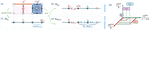
Impact of Clifford operations on non-stabilizing power and quantum chaos
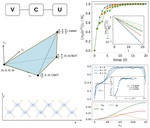
Complexity transitions in chaotic quantum systems
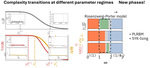
Unveiling Eigenstate Thermalization for Non-Hermitian systems
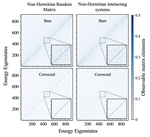
Genuine multipartite entanglement in quantum optimization
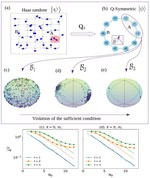
Unraveling the emergence of quantum state designs in systems with symmetry
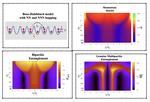
Genuine multipartite entanglement in a one-dimensional Bose-Hubbard model with frustrated hopping
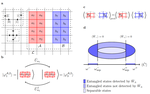
Entanglement Witnessing for Lattice Gauge Theories
Projective symmetry group classification of chiral $\mathbb{Z}_2$ spin liquids on the pyrochlore lattice: application to the spin-$1/2$ XXZ Heisenberg model
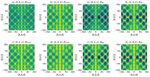
From entanglement certification with quench dynamics to multipartite entanglement of interacting fermions